

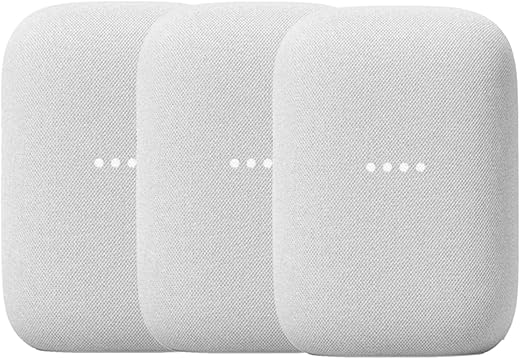
We put Google’s room-filling Nest Audio 3-pack against Amazon’s pocket-sized Echo Dot — which one saved us time, money, and sounded dramatically better?
When we want immersive rooms or compact convenience, we weigh the Nest Audio 3‑pack against the Echo Dot to help you choose the best smart speaker setup. We focus on sound, smart features, setup, privacy and value so you can pick what fits your home.
For more room-by-room ideas, see our Smart Hubs & Voice Assistants guides.
Home Audio

We think this bundle is a simple way to get consistent, high-quality sound across multiple rooms and strong Google Assistant coverage. It’s especially useful if you want synchronized playback or a stereo pair, though it comes at a higher price and requires mains power.
Compact Helper

We find this model delivers impressive clarity and Alexa responsiveness for a very modest price, making it an easy choice for bedrooms and small spaces. It won’t replace larger speakers for deep bass or full-room sound, but it’s a highly practical, budget-friendly smart speaker.
Nest Audio 3-Pack
Amazon Echo Dot
Nest Audio 3-Pack
Amazon Echo Dot
Nest Audio 3-Pack
Amazon Echo Dot
Design, Build and Setup — Which Fits Your Home?
Physical design, materials and footprint
We like the Nest Audio’s taller, fabric‑wrapped rectangular profile — it reads as a small bookshelf speaker rather than a gimmick. Google uses recycled materials and offers a neutral gray that blends into living rooms and offices. The three‑unit bundle gives visual consistency across rooms and a modest footprint (about 4.9″ wide × 6.9″ tall).


Quick design highlights
Unboxing and initial setup
Unboxing the Nest 3‑pack is straightforward: three speakers, power cables, and the Google Home app walks us through naming, Wi‑Fi and stereo/grouping. The Google Home UI makes assigning two for stereo and one for another room quick. Echo Dot unboxes even simpler — one puck, power cable, and the Alexa app’s guided Wi‑Fi setup or Amazon’s Wi‑Fi simple setup gets us online fast.
Multi‑room grouping, portability and ongoing management
The 3‑pack is the clear multi‑room winner out of the box — grouping and synchronized playback are native in Google Home. Echo Dot supports multi‑room playback via Alexa groups too, but you’ll need multiple Echo devices. Neither speaker is battery powered; both require mains power. Ongoing management is app‑based: Google Home centralizes Nest and Chromecast devices; Alexa offers robust routines and device skills for broader smart‑home control.
For more hub and speaker combos, see our picks in We Found 6 Best Voice Assistant Smart Hub Deals.
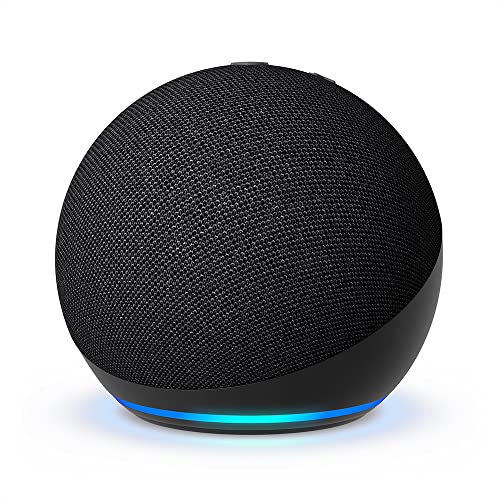

Audio Performance and Smart Features — Sound, Assistants, and Ecosystem
Sound quality and loudness
We found the Nest Audio (3‑pack) delivers richer, more balanced sound: clear mids and noticeably stronger bass from the 75mm woofer. Two speakers paired for stereo give genuine left/right imaging and a wider soundstage; all three synchronized fill multiple rooms without obvious lag. The Echo Dot punches above its size with improved clarity and surprising bass for a puck, but it can distort at maximum volume and lacks the low‑end authority of a Nest.
Voice assistants and responsiveness
Google Assistant handles conversational queries and follow‑ups more naturally; it’s our pick for info retrieval and contextual questions. Alexa is exceptionally good at quick smart‑home commands, routine execution, and third‑party “skills.” In day‑to‑day use both are fast; Alexa feels slightly snappier for local routines, Google feels smarter with search/context.
Streaming, connectivity, and smart home
Nest supports Chromecast built‑in plus Bluetooth, which makes casting from apps seamless and ideal for multi‑device audio. Echo Dot supports Bluetooth and direct integrations with Amazon Music, Spotify, Apple Music and more via Alexa. Multi‑room works out of the box with the Nest 3‑pack; Echo requires multiple Echo devices and Alexa groups. For broad third‑party device support Alexa has the edge; Google Home offers tighter Chromecast and Google ecosystem integration.
If you’re pairing speakers with your TV, our Best 4K Streaming Sticks for Smart TVs guide covers HDMI streaming options that work well with both ecosystems.


Side-by-Side Feature Comparison
Value, Privacy, and Practical Considerations — Price, Privacy, and When to Choose Each
Price, bundle value, and scale
We compare sticker prices and real-world scaling. The Nest Audio 3‑pack (~$220) gives a cost-per-speaker of roughly $73 and delivers immediate multi‑room or stereo out of the box. A single Echo Dot (~$50) is far cheaper up front; matching three Dots costs about $150 but each Dot has smaller drivers and no true stereo pairing like two Nest units.


Privacy, firmware, and data controls
We find both devices offer physical mic‑off buttons and in‑app controls to review and delete voice recordings. Amazon documents layered privacy controls; Google provides My Activity controls and auto‑delete options. Firmware updates are automatic for both — necessary for security but limiting if you want to delay changes.
Accessory compatibility and durability
Echo has broader third‑party skill and smart‑home integrations (and optional Zigbee in some models); Nest excels with Chromecast and Google ecosystem devices. Both are mains‑powered, not water‑resistant, and use similar limited warranties. Long‑term costs hinge on ecosystem lock‑in, replacement frequency, and whether you value immediate multi‑room audio (Nest) or lower per‑unit entry cost (Echo Dot).
Final Verdict — Which We Recommend
We pick the Nest Audio 3‑pack as our clear winner for richer multi‑room sound, stereo pairing and seamless Google Assistant integration.
Buy Nest Audio for fuller whole‑home audio and Google‑centric smart homes. Choose Echo Dot when budget, compact rooms or Alexa‑heavy setups matter. Ready to upgrade your home sound today?
Related Smart Home Guides
Want to go deeper on assistants, hubs, and home audio deals?

Sound quality note: Nest Audios have better midrange and vocals, so if you listen to podcasts or vocals-heavy tracks it’s noticeable.
Echo Dot can get surprisingly loud for its size but lacks depth.
If you want punchy bass for music, neither will replace a dedicated speaker, but the Nest 3-pack gives a nicer overall experience for streaming around the house.
Well observed — we heard the same in our testing. The Nest handles vocals and clarity better, Dot wins in price and footprint.
What about pairing multiple Dots vs the 3-pack for bass? Anyone tried that?
Multiple Dots help fill space but they don’t magically improve bass. Nest has better drivers for lower mids, so single Nest can outperform multiple Dots in tonality.
Echo Dot is fine for a bedroom alarm and podcasts, but Alexa sometimes feels like it’s two steps behind.
Also, why does mine randomly giggle? 😂
Thanks, Sophie — will try that. Stupidly woke me up laughing last week.
Many reported the ‘giggling’ behavior — might be Alexa confirming something or a new routine. Check your interaction history. Glad the Dot works well for basic use though.
Haha the giggle is real. You can turn off some sound responses in the Alexa app if it bugs you.
Echo Dot = bedroom MVP. Cheap, loud enough, and Alexa handles my smart bulbs without fuss.
Plus it fits on a nightstand without looking like a spaceship.
Echo Dot is definitely a solid choice for bedrooms and small spaces — compact and affordable.
Agree — I have one in my guest room and guests figure it out instantly.
Long story short: pick the ecosystem you’re already in.
I’ve got a Pixel phone and Nest fits like a glove.
Friends with iPhones swear by Alexa for certain skills though.
If you’re switching platforms expect a little faff with device linking and reconfiguring everything.
Also, tiny typo in the article: ‘definately’ — made me chuckle 😂
Couldn’t agree more. I tried mixing devices and it became messy. Stuck with Nest for simplicity.
Glad it wasn’t just me noticing the typo. Cheers!
Thanks for the heads-up — fixed the typo! And yes, ecosystem lock-in is real — compatibility and convenience usually win out in daily use.
I went with the Nest Audio 3-pack for our apartment and honestly it was the best decision for multi-room music.
– Setup was smooth with Google Home app.
– Sound is fuller across the house vs a single Echo Dot.
– Assistant recognition is solid but Alexa still has more skills IMO.
Very happy overall — pricey upfront but worth it if you want true multi-room stereo. 🙂
Totally agree. I used the 3-pack for my kitchen+living and it sounds way better than chaining Dots. Also less annoying LEDs 😅
Great to hear your experience, Emma — thanks for sharing! We found similar: the 3-pack wins for whole-home sound while the Dot is better as a cheap, single-room option.
Good point about the LEDs — Nest Audio is definitely more discreet in aesthetic terms.
Did you pair them as stereo or just separate rooms? Thinking of doing stereo for my living room.
Privacy question — do Nest Audios keep more data than Echo Dots? I’m leaning toward Google for the sound but freak out a bit about voice recordings.
I know both companies store commands, but is one actually more ‘private’ in practice? Any tips for minimizing data collection?
Also consider using a separate account or limited profile for smart home devices if you want to keep things compartmentalized.
I set my settings to auto-delete every 3 months and disabled voice purchasing. Feels better. Not perfect, but less creepy.
If privacy is a huge concern, there are offline alternatives, but they usually mean giving up smart assistant convenience. Trade-offs everywhere!
Good question. Both platforms store voice interactions by default, but both also let you delete recordings (manually or auto-delete). Google tends to integrate data across services more, while Amazon ties voice data to your Amazon account and purchases. If privacy is top priority: enable auto-delete, review voice history, and limit third-party skills/actions.
Thanks — that’s helpful. Didn’t realize there’s an auto-delete option. I’ll enable that tonight.
Price is the deciding factor for me. The Nest 3-pack was a bit of an investment but came with deals.
Setup took like 10 minutes and the multi-room sync is neat.
Echo Dot’s advantage: you can grab 3 Dots for a similar price on sale if you’re patient.
Pro tip: sometimes retailers bundle a smart plug or free trial which can tilt value toward one option.
I waited for a bundle sale too — worth it. But if you want quality over quantity, go Nest.
Thanks — I’ll watch the seasonal promos. Patience pays off 😄
Yep — sales change the calculus. Keep an eye on holiday deals; Dots often drop low and make multi-room cheap.
Quick question — if I have Philips Hue lights, do they play nicer with Echo or Google? Want simple voice control and routines.
I use Hue with Google — setting scenes from the Home app is easy. But Alexa has better community-made routines if you’re into complex automations.
Both work well with Hue. Alexa sometimes offers more granular control via Routines, but Google has improved a lot. If you’re already in the Google or Amazon ecosystem, stick with that for the smoothest experience.